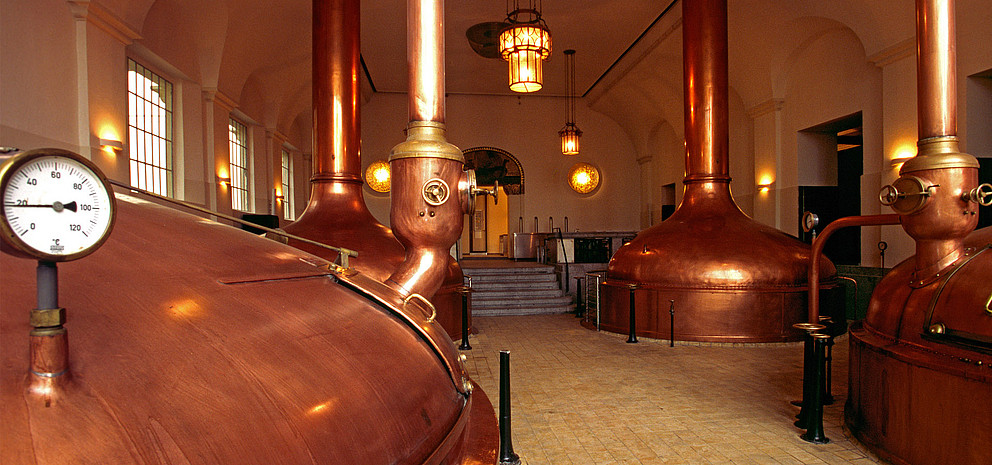
Brewery - First Step In Game
Even if the brewery is not the "really first" step of the supply chain beer - we know there is s.th. like water, hop, malt yeast, but also bottles, bottle caps, labels and a whole bunch more like special tools and so on -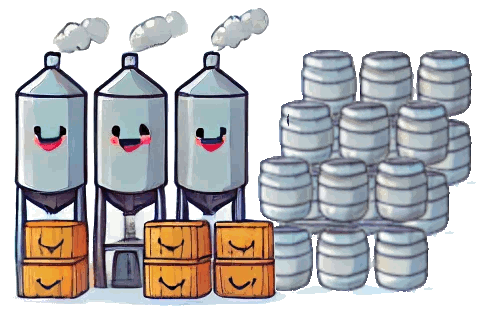
we assume within the beergame the brewery as the first step of the supply chain.
while talking about supply chain: some people would name more correctly the customer as first step!
Important: When the brewer orders some beers within its own production, we know for sure, the beer will be there within the next but one period, e.g. when the brewer orders in week 4, the beer will be available for the brewer in week 6.
Distributor - Second Step in the Game
Even if the brewery is not the "really first" step of the supply chain beer - we know there is s.th. like water, hop, malt yeast, but also bottles, bottle caps, labels and a whole bunch more like special tools and so on -
If not, you really should play this game! - if yes, it's a must to play this game to learn how to reduce out of stock situations while reducing cost from overstocks.
Considering this, the task of the distributor is to ensure an excellent supply of the wholesaler, at the lowest possible inventory costs - and keep under control what we call the bullwhip effect!
Third Step in the Game - Wholesaler
When the wholesaler as a manager checks its incoming orders of the retailer, he will have a look at the stock situation in the warehouse, and check what arriving to the warehouse in the actual period. Both - the old stock plus the new incoming goods- will be delivered to the retailer within this actual period, if such quantities are needed. But only, if the old shortages plus the new incoming orders of the retailer are less or equal the actual stock and the incoming goods of the wholesaler. The wholesaler shall be happy, since he has no fees to pay because of out of stock situations.
This - of course - is also valid for the brewery, the distributor and the retailer.
Last Step in the Game - Retailer
Last step? First step? Fourth step or maybe second step? In the end, it's just a point of view. If you assume the customer as first step, it would be step number 2. If you see the brewery as first step, the retailer is step number 4. And if you see the decision making within the game, it is the first or the last step within the game.
They play as a team to reduce the costs along the entire supply chain. Within the beergame, this are costs for storage and costs for out of stock situations. That's the real challenge within this game, since this is what matters, because different supply chains compete against each other every day and fight for customers.
Within this version of the beergame, you may play:
-- alone and decide for the whole supply chain
-- alone and decide for just one actor within the chain, while the others are simulated by the computer
-- with 4 groups of decisionmakers. One for each of the above mentioned steps to play against each others
-- with 4 groups of decisionmakers. One for each of the above mentioned steps to play with each others
In all cases, the orders of the customers can be adjusted by superusers as well as the costs for out of stock situations and the costs for storage. As a teachers you can simulate specific situation to illustrate the bullwhip effect or other situations you want to teach.